Stand on any canal bridge at rush hour and you’ll see it: bikes outnumbering cars several times over. Amsterdam doesn’t just like cycling; the city runs on it.
You’re not the first to ask “how many bikes are in Amsterdam?” In this guide, you’ll get the latest estimates for 2026, bikes-per-person ratios, trends over the last decade, how those bikes are parked and managed, and what it all means for daily life, tourism, and urban planning.
Introduction: Amsterdam’s Unique Love Affair with Bicycles
Why Bikes Shape Amsterdam’s Identity
Amsterdam’s streets are narrow, flat, and often one-way for cars. For bikes, they’re a fast, direct grid. That physical layout, combined with decades of policy choices, turned cycling into the default way to move.
Most children learn to ride young and keep cycling through school, work, and family life. Short distances, dense neighborhoods, and mixed-use streets make bikes the quickest option for many trips under 7–8 km.
If you arrive by train at Amsterdam Centraal, the first thing you see isn’t the canal. It’s the ocean of parked bikes.
The Popular Question: How Many Bikes Are There?
The exact number changes daily, but city surveys and transport studies give a strong range. They count household bike ownership, check parking pressure at stations, and sample travel behavior across districts.
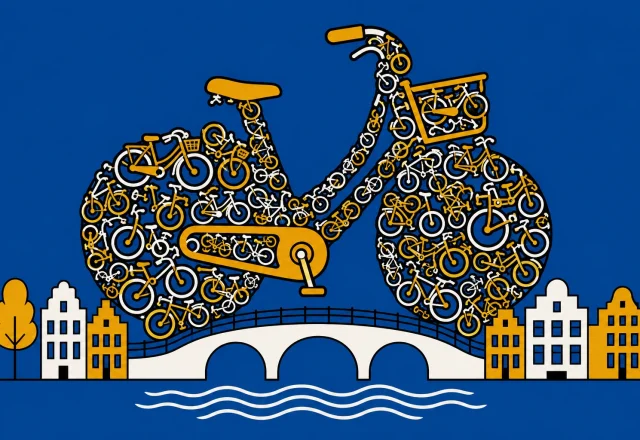
That’s how we can move beyond “a lot of bikes” and talk in real numbers: around a million bicycles in a city of under a million people.
How Many Bikes Are in Amsterdam? Key Figures and Trends
Current Estimates of Bike Numbers
Recent municipal and national transport studies consistently place Amsterdam’s bike fleet at roughly:
- Estimated total bicycles in Amsterdam (2026): 850,000–1,000,000
Different studies land on slightly different points within that band, depending on what they include:
- Some count only private bikes registered or reported in household surveys.
- Others add bike-share fleets and long-term rentals.
- None can fully track abandoned bikes or those rusting in back gardens.
What’s clear: there are hundreds of thousands more bicycles than cars in the city, and bikes dominate short urban trips.
Bikes Per Capita: Putting Numbers in Perspective
Amsterdam’s population is just under a million inhabitants in 2026 when you focus on the municipality area (not the wider metropolitan region).
Using that:
- Bikes per person (rough estimate): 0.9–1.1
- In practical terms, many households own more than one bike per adult (e.g., daily bike plus old spare), while some residents don’t own any.
You’ll often hear the phrase “more bikes than people.” That holds up when you include:
- Second bikes at work or at the station
- Cargo bikes for families and deliveries
- Old spare bikes kept for guests or bad weather
For visitors, it means you’ll often feel outnumbered on foot.
Growth Trends Over the Past Decade
Cycling in Amsterdam is old, but the last 10–15 years have changed what people ride and how often, not just how many bikes exist.
Key long-term trends:
- Stable-to-slightly-rising total bike numbers. The city was already highly saturated a decade ago, so growth is now gradual, not explosive.
- Shift from simple omafiets (classic Dutch bikes) toward e-bikes and cargo bikes.
- More intensive usage. Longer average daily cycling distances, more bike commuting from surrounding suburbs, and more year-round riding thanks to better infrastructure and e-bikes.
The raw count of bikes doesn’t double or triple anymore. Instead, the existing stock is used more heavily, and more of it is electric.
Types of Bikes in Amsterdam
Personal vs. Shared Bikes
Most bikes you see locked to bridges and racks are privately owned. Amsterdam is still built around personal bike ownership, not public bike-share as the main mode.
A rough split:
- Personal bikes: The vast majority, in the high hundreds of thousands.
- Shared / public bikes: A much smaller but visible fraction.
Typical shared options you’ll notice:
- OV-fiets: The national railway’s rental bikes parked at stations across the city.
- Private long-term rental or subscription models.
- Smaller dockless fleets and micro-mobility services, where regulations allow.
For a commuter living in Amsterdam, owning at least one personal bike is still standard.
The Rise of Electric Bikes
Electric bikes (e-bikes) have reshaped how far and how often people cycle:
- An increasing share of new bike sales in and around Amsterdam are electric.
- E-bikes make 10–20 km commutes realistic without arriving drenched in sweat.
- Older adults stay mobile by replacing some car or tram trips with e-bikes.
You see three broad e-bike types:
- Standard e-bikes for commuting and daily use
- Speed pedelecs for longer regional commutes (often using different rules/paths)
- Electric cargo bikes (bakfietsen) for families and last-mile logistics
While classic single-speed Dutch bikes still dominate the street view, the share of e-bikes within the million-bike ecosystem keeps climbing every year.
Rental Bikes and Tourist Use
Visitors add thousands of extra bikes onto the streets daily.
Typical tourist-focused bikes:
- Classic city bikes from rental shops near stations and major attractions
- Hotel and hostel rental fleets
- Guided tour bikes for 2–3 hour rides
Short-term rental bikes likely account for tens of thousands of cycles in circulation during peak tourist seasons, on top of the city’s core stock.
For you as a visitor, that means:
- It’s easy to rent a bike within a few minutes’ walk anywhere central.
- You join an already dense cycling stream, so basic cycling etiquette matters more than gear.
Managing Bike Volume: Infrastructure and Urban Planning
Bike Lanes and Parking Facilities
You can’t handle close to a million bikes without serious infrastructure.
Key elements you’ll see on the ground:
- Separated bike lanes on most main roads, often wide enough for side‑by‑side riding.
- Priority at junctions, with dedicated bike traffic lights and early green phases.
- Bike streets (“fietsstraten”) where cars are “guests” and bikes dominate the carriageway.
Parking is the real pressure point:
- Multi‑storey bike parking garages at hubs like Amsterdam Centraal and major metro/tram nodes.
- Floating or underground bike parking facilities near busy waterfront areas.
- Strict rules about where you can leave a bike near key stations and squares.
The number of formal bike parking spaces has grown into the hundreds of thousands across public racks and garages, yet many areas still feel full.
Tackling Bike Theft and Abandonment
High bike density brings two stubborn problems: theft and abandoned bikes.
Bike theft:
- Amsterdam has long had a high rate of stolen bikes per year.
- Popular targets: unlocked bikes, high‑value e-bikes, and poorly locked bikes at night.
- The city and police promote double-locking and secure parking, and they run sting operations and mark-ups.
Abandoned bikes:
- Many bikes are left broken, rusting, or simply unused for months.
- The city regularly tags suspicious bikes; if they’re not moved, they’re removed.
- Tens of thousands of bikes are cleared from streets and racks every year to free up space.
If you live in Amsterdam, you quickly learn that:
- A sturdy frame lock plus a second chain lock is normal, not overkill.
- Leaving a bike unclaimed in busy areas for weeks is a good way to lose it—to thieves or to city cleanup.
Innovative Solutions in Amsterdam
To keep a million bikes functional and parkable, Amsterdam tests new ideas constantly:
- Digital signage at big parking garages showing free spaces in real time.
- Apps and wayfinding to guide cyclists to available racks.
- Underground, underwater, and floating bike garages that use scarce surface space more efficiently.
- Pilot projects for cargo bike logistics hubs, replacing van deliveries in some neighborhoods.
The direction is clear: bikes aren’t going away; the city keeps redesigning itself to hold them.
Amsterdam’s Bikes in Global Context
Comparison with Other Cycling Cities
Amsterdam is often mentioned alongside cities like Copenhagen and Utrecht. All three have high cycling shares and serious infrastructure, but they differ in size and ratios.
A simplified comparison view:
| City | Rough Population (2026) | Bikes Per Person* | Key Cycling Feature |
|---|---|---|---|
| Amsterdam | Just under 1 million | ~0.9–1.1 | Dense grid of separated bike lanes, huge parking |
| Copenhagen | ~0.8 million | High, near 1 | Very high bike commute share, strong design |
| Utrecht | ~0.3–0.4 million | Above 1 | Massive station bike garage, high bike share |
*Ratios are indicative, based on various municipal and national studies.
What stands out:
- All three cities lean heavily on bikes for daily trips.
- Amsterdam’s cycling culture is more visible globally due to tourism and media.
- Utrecht matches or exceeds Amsterdam in some measures (like share of trips by bike), but at smaller scale.
In absolute bike numbers, Amsterdam is among the world’s densest large cities for everyday cycling.
Lessons for Urban Mobility Worldwide
Cities studying Amsterdam’s numbers often take away several lessons:
- Cycling share grows where infrastructure is continuous, not patchy.
- Bike parking matters as much as bike lanes once cycling reaches a certain share.
- Legal and social norms—like cars yielding to bikes and clear rules at junctions—are as crucial as concrete.
Planners don’t copy Amsterdam wholesale, but they use its data and design choices to build their own bike-forward networks.
The Social and Environmental Impact of Amsterdam’s Bikes
Cycling’s Role in Daily Life and Commutes
For many Amsterdam residents, the bike is the default choice for:
- Commuting to work or school
- Grocery shopping and errands
- Social visits, nightlife, and cultural events
Official travel surveys show a massive share of trips under 7–10 km done by bike rather than car. That reduces congestion on narrow streets and eases the load on trams and buses.
Children routinely ride to school, often in cargo bikes or on their own small bikes alongside adults, which normalizes cycling from early childhood.
Tourism and the City’s Cycling Culture
Tourists don’t just watch the bikes—they join them.
Impacts:
- Bike tours and rentals are now a standard part of many itineraries.
- The sheer number of unfamiliar riders adds complexity at busy intersections.
- The city runs campaigns asking visitors to respect cycling rules, avoid blocking bike lanes, and walk bikes in some ultra-busy alleys.
For you as a visitor, the data point that there are nearly a million bikes isn’t just trivia. It’s a warning and an invitation: you’re entering a bike-first traffic system, so act accordingly.
Sustainability and Health Benefits
Replacing short car trips with bike rides has clear benefits:
- Lower emissions within the city center and neighborhoods.
- Less noise and space taken by parked cars.
- Higher daily physical activity built into normal routines.
Those millions of daily pedal strokes, multiplied by hundreds of thousands of residents, make a measurable difference in air quality and public health indicators.
The key insight: the city’s bike count is a climate and health tool, not just a fun statistic.
Conclusion: Why Knowing the Number of Bikes Matters
“About a million bikes” sounds like trivia until you understand what it represents: a city where cycling is the main everyday transport system, not a lifestyle hobby.
Knowing how many bikes are in Amsterdam helps you:
- Read the streets correctly as a visitor or new resident.
- Benchmark your own city’s cycling progress.
- Understand why infrastructure, parking garages, and theft-prevention policies look the way they do.
If you’re planning a trip, take one concrete step: plan at least one day moving only by bike. Rent a simple city bike, review the local rules, and experience what those million bicycles actually feel like in motion.

Alison is a travel writer passionate about solo adventures, photography, and memorable getaways. She loves discovering beautiful destinations, distinctive stays, authentic local experiences, and hidden gems, creating stories that help curious travelers explore beyond the usual tourist highlights. Her work has been featured in Forbes, CNN, Travel + Leisure, Yahoo, and other major outlets.