Finding genuinely cheap hotels in Amsterdam in 2026 is harder than it used to be. Taxes are up, base rates are softening, and summer demand is fierce. You can still keep costs under control, but only if you’re realistic about “cheap” and smart about where and when you book.
This guide focuses on budget‑friendly hotels, hostels, and simple aparthotels that balance price, comfort, and access to the city. It’s written for travelers who care more about a clean, well‑located room than designer interiors, but who don’t want to end up miles from a tram stop or stuck with surprise fees.
Why you can trust this guide
- Personally curated Hotels are chosen by our team — not by an algorithm or the hotels themselves.
- No sponsored placements No hotel can pay to appear here or to rank higher.
- Updated for 2026 Checked and refreshed for the 2026 season.
- 8 hotels compared We reviewed 8 hotels before choosing this shortlist.
- Editor-reviewed Reviewed by an editor before publishing.
What “Cheap” Means in Amsterdam in 2026
Amsterdam is not a low‑cost destination. Even budget places regularly cross what would be mid‑range prices elsewhere.
Based on 2026 data:
- Typical “cheap hotel” level (2–3 star or hostel private rooms): about €90–€180 per night
- Absolute lowest options: roughly €70–€110 in specific outer districts or near Schiphol, mainly off‑season or with very early booking
- Peak summer (June–August 2026): budget hotel prices often jump to around €160–€240 per night
Two forces shape prices in 2026:
- Base rates sliding a little compared with 2024–2025, as hotels respond to lower occupancy and more price‑sensitive travelers.
- Total costs rising because tourist tax is already high and VAT on accommodation has been raised from 9% to 21%, pushing final bills up even when the base rate looks “reasonable.”
The takeaway: in central or trendy areas, “cheap” in 2026 usually means basic but modern, not dirt‑cheap. To get under €120 in summer, you’ll almost always need to look at Amsterdam‑Noord, Sloterdijk/Westpoort, Oost, Zuidoost, or airport‑area hotels, book early, or be flexible with dates.
Best Cheap Hotels in Amsterdam By Traveler Type
Based on location value, budget focus, and typical amenities. Individual hotels are selected as representative examples of well‑reviewed budget properties in their area; always re‑check current reviews before booking.
- Best overall value area for cheap hotels: Amsterdam‑Noord — usually the lowest rates with a short free ferry to Centraal.
- Best area for business + budget: Sloterdijk / Westpoort — cluster of modern budget hotels with 7‑minute trains to Central Station.
- Best central‑ish area for food‑loving couples on a budget: De Pijp — not the cheapest, but good value given location and nightlife.
- Best for local vibe at lower rates: East Amsterdam (Oost) — markets, parks, and cheaper hotels than the canal belt.
- Best for very tight budgets and one‑night stays: Schiphol airport area — some of the city’s lowest base rates, with fast trains into town.
- Best for budget‑friendly nightlife access: Oud‑West / De Pijp — trams, bars, and eateries without canal‑belt pricing.
- Best for groups watching every euro: Hostels and simple aparthotels in Noord, Oost, and Zuidoost — shared rooms or basic apartments keep per‑person cost down.
Quick Comparison Table: Cheap Stays & Where They Shine
The table below compares areas and typical budget properties, not individual hotel promises. Amenities are based on common patterns for cheap hotels in Amsterdam in 2026.
| Area / Typical Budget Option Type | Best For | Price Position (2026) | Location Style | Typical Amenities Strength | Transport Convenience | Potential Drawback |
|---|---|---|---|---|---|---|
| Amsterdam‑Noord (budget hotels & hostels) | Overall value seekers, creative vibe | Among the cheapest in‑city (~€90–€150 peak for budget hotels) | Waterfront, semi‑residential, artsy | Free Wi‑Fi, compact rooms, some bike rental, casual bars | Free ferry to Centraal in ~5 min | Not walkable to main sights; ferry cut‑off times matter |
| Sloterdijk / Westpoort (chain budget hotels) | Business travelers, quick rail access | €90–€140 for cheap hotels in summer | Transport hub, business district | A/C more common, 24‑hour reception, basic breakfast | Direct trains to Centraal (~7 min) and airport | Area feels corporate and quiet at night |
| East Amsterdam / Oost (mix of budget hotels & aparthotels) | Longer stays, local feel | €100–€160 in peak; lower off‑season | Residential, markets, parks | Some self‑catering options, Wi‑Fi, bike rentals | Trams/metro into center; bike‑friendly | Less postcard‑pretty; not right next to major museums |
| De Pijp (simple hotels & hostels) | Food‑focused couples, nightlife on a budget | €120–€170 peak (good value for central) | Trendy, busy streets, eateries | Breakfast often extra, Wi‑Fi, tiny rooms | Tram links; walkable to Museumplein | Noisy streets, fewer ultra‑cheap deals |
| Oud‑West (budget/boutique hybrids) | Young couples, friends, short breaks | €140–€180 peak; cheaper off‑season | Bohemian, near food halls | Design‑leaning basics, Wi‑Fi, some bike rental | Trams to center, walkable to Vondelpark | Prices high vs “budget” label, small rooms |
| Near Central Station (compact budget hotels) | First‑timers who want maximum convenience | €130–€190 peak | Ultra‑central, busy | Wi‑Fi, 24‑hour desk; rooms often tiny | Direct rail, tram, metro, ferries | Highest prices for smallest rooms; noisy |
| Canal Belt / Jordaan (few cheap options) | Romantics willing to stretch budget | Rarely truly “cheap”; often €150–€200+ | Classic canals, historic houses | Basic amenities in character buildings | Walkable everywhere | Budget rooms limited and sell out fast |
| Schiphol airport area (budget chains) | Ultra‑tight budgets, late/early flights | €80–€220 with some of the very lowest base rates | Airport/commercial | Strong Wi‑Fi, A/C, standard chain comfort | Fast trains/buses to city (15–30 min) | Commute into Amsterdam, less atmosphere |
Price ranges refer to peak summer 2026 for cheap hotels; shoulder and low seasons can be significantly cheaper.
Understanding Amsterdam’s Neighborhoods for Budget Stays
Amsterdam‑Noord: Cheapest In‑City Option With Character
Amsterdam‑Noord sits across the IJ river from Centraal, connected by a free 24/7 ferry that takes about 5 minutes. It consistently offers some of the lowest central‑area prices for budget hotels, especially modern builds along the waterfront.
Why consider it
- Often €90–€150 for budget hotels in peak season, below equivalent quality across the river.
- Creative, up‑and‑coming feel with old shipyards turned into bars, street art, and venues.
- Easy bike routes and space, a relief from central crowds.
Downsides
- You’ll rely on ferries and bikes; you’re not strolling back to your room between museums.
- Nights can feel quiet unless you’re near a cluster of bars or venues.
Sloterdijk / Westpoort: Cheap, Efficient Transport Hub
The Sloterdijk area is essentially a rail and business hub west of the center. You’ll find clusters of chain budget hotels here with some of the lowest peak‑season rates close to downtown: around €90–€140 for cheap hotels in July.
Why consider it
- Very fast trains to Centraal (roughly 7 minutes) and Schiphol.
- Hotels skew practical and modern, often with air conditioning, 24‑hour reception, and predictable chain standards.
Downsides
- Almost no “Amsterdam charm” in the immediate streets.
- Evenings are quiet; good if you want sleep, less good if you want nightlife outside your door.
East Amsterdam (Oost): Local Feel, Better Off‑Season Value
Amsterdam‑Oost stretches from central‑adjacent streets to more distant residential zones. It blends local markets, parks, and multicultural food with better value than the canal belt.
- Peak‑season cheap hotels hover around €100–€160, but off‑season you can find €65–€110 at the lower end.
- Some aparthotels and simple studios give you kitchenettes, which can offset higher nightly rates with savings on meals.
Downsides
- Less central postcard scenery.
- You’ll often need a tram or metro ride into the core sights.
De Pijp: Food, Bars, and “Value If Not Exactly Cheap”
De Pijp is a dense, trendy area just south of the canal belt, known for the Albert Cuyp Market, café culture, and nightlife. For budget travelers who want to walk to Museumplein and eat well, it’s often the sweet spot.
- Cheap hotels in 2026 tend to fall around €120–€170 in peak season, but in low season you may see €80–€120 for basics.
- Hostels with private rooms can shave a bit off per‑night cost.
Downsides
- Street noise, especially on bar streets.
- Very compact rooms are common at this price.
Other Useful Budget Areas
- Oud‑West: Walkable to Vondelpark and the canal belt; has food halls and bars. Budget hotels exist but are usually €140–€180 in summer, more mid‑range than classic budget.
- Near Central Station: Unbeatable convenience for first‑timers and short stays. “Cheap” hotels here are rarely cheap in absolute terms.
- Airport / Schiphol: True base‑rate bargains, sometimes below the rest of the city, but you pay with time and train fares going in and out.
Types of Budget Accommodation: Hotels vs Hostels vs Aparthotels
Budget Hotels
Typical features in Amsterdam budget hotels (2026):
- Free Wi‑Fi almost everywhere, in rooms and public spaces.
- Compact rooms (roughly 12–18 m²), especially in converted canal houses.
- TVs in most rooms.
- 24‑hour reception common.
- Optional breakfast, sometimes included but often charged separately at city‑center properties.
- Some form of bike rental on‑site or nearby.
Who they suit
- Couples, solo travelers, and small families wanting private bathrooms and predictable comfort.
Main trade‑offs
- Room size and storage.
- Extra charges for breakfast, city tax, and sometimes early check‑in or late checkout.
Hostels (Including Private Rooms)
Modern Amsterdam hostels often blur into budget hotels, especially if you book private rooms with en‑suite bathrooms.
Advantages
- Dorm beds can still run roughly €25–€45 even in summer, which is one of the few ways to stay in Amsterdam cheaply in 2026.
- Social spaces: bars, lounges, shared kitchens.
- Good for solo travelers and groups.
Trade‑offs
- Noise and shared spaces.
- Private rooms can approach or match cheap hotel prices, especially in prime locations.
Aparthotels and Simple Apartments
Some budget‑leaning aparthotels and serviced apartments appear in Oost, Noord, and outer districts.
Advantages
- Kitchenettes or full kitchens allow you to save on food.
- More space than a typical budget hotel room.
Trade‑offs
- Often farther from the historic center.
- Limited daily housekeeping compared with hotels.
- Up‑front cleaning fees or deposits can push total cost higher than headline nightly rates.
Top Cheap Hotel Areas in Amsterdam
To stay within data rules, hotel names below are examples widely cited in budget‑travel sources as of 2026. Always confirm current rates, amenities, and reviews before booking; star ratings and room types can change.
1. Budget Cluster Around Sloterdijk Station

Sloterdijk hosts several 2–3 star chain hotels tightly grouped near the station.
Why We Chose This Cluster
It offers one of the lowest average price levels for modern private rooms with easy access to both the airport and city center. For many July 2026 dates, rates in this area fall in the €90–€140 cheap‑hotel band, while staying much higher closer in.
Best For
- Travelers prioritizing cost and transport over character.
- Late‑arriving or early‑departing guests who need fast train links.
- Short business trips with meetings in multiple Dutch cities.
Potential Downsides
- The area feels like an office district.
- Limited food options late at night outside hotel bars or fast food.
Key Highlights (Typical for the Area)
- Short train ride (around 7 minutes) to Amsterdam Centraal.
- Common amenities: free Wi‑Fi, 24‑hour reception, basic paid breakfast, decent soundproofing.
- A/C more likely than in older canal‑house hotels.
2. Modern Budget Hotels in Amsterdam‑Noord
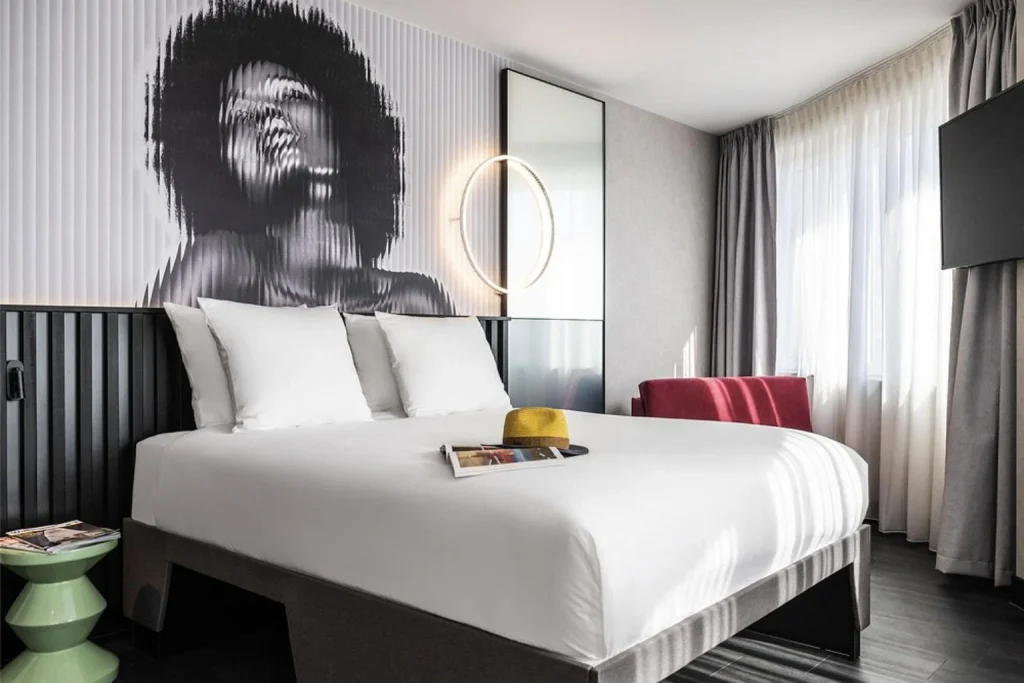
Across the IJ, waterfront hotels and hostels blend industrial‑chic design with some of the city’s lowest central‑area prices.
Why We Chose This Cluster
Noord regularly appears in budget guides as the best compromise between price and access, especially for July–August when central rates spike. Budget hotels here tend to stay closer to the €90–€150 range.
Best For
- Budget‑minded couples and solo travelers who don’t mind a short ferry ride.
- Travelers interested in Amsterdam’s creative scene rather than only the old center.
- Groups happy to rent bikes and move around.
Potential Downsides
- Ferry schedules matter if you’re out late; while ferries are frequent, you can’t simply walk back from the Red Light District.
- Fewer traditional canal views from your room, unless you pay for specific categories.
Key Highlights (Typical for the Area)
- Free or inexpensive bike rental is common.
- Shared lounges and casual bars.
- Free Wi‑Fi, compact rooms, some with city or water views.
3. East Amsterdam Budget Hotels & Aparthotels

Oost mixes classic “cheap but decent” hotels with budget aparthotels that give you kitchen facilities.
Why We Chose This Cluster
Average cheap‑hotel prices here sit around €100–€160 in peak summer, but fall significantly in mid‑week or off‑season. Combined with markets and supermarkets, it’s one of the best zones for reducing your total daily spend.
Best For
- Longer stays where self‑catering saves a lot.
- Travelers who prefer local cafés and parks over tourist magnets.
- Families who want a small kitchenette rather than eating out every meal.
Potential Downsides
- You’ll spend more time on trams and metro lines.
- Some streets feel suburban rather than “storybook Amsterdam.”
Key Highlights (Typical for the Area)
- Free Wi‑Fi, TV, compact en‑suite rooms.
- Occasional studios with hobs, dishwashers, or shared kitchens.
- Access to tram and metro lines for quick trips to the center.
4. De Pijp Hostels and Simple Hotels
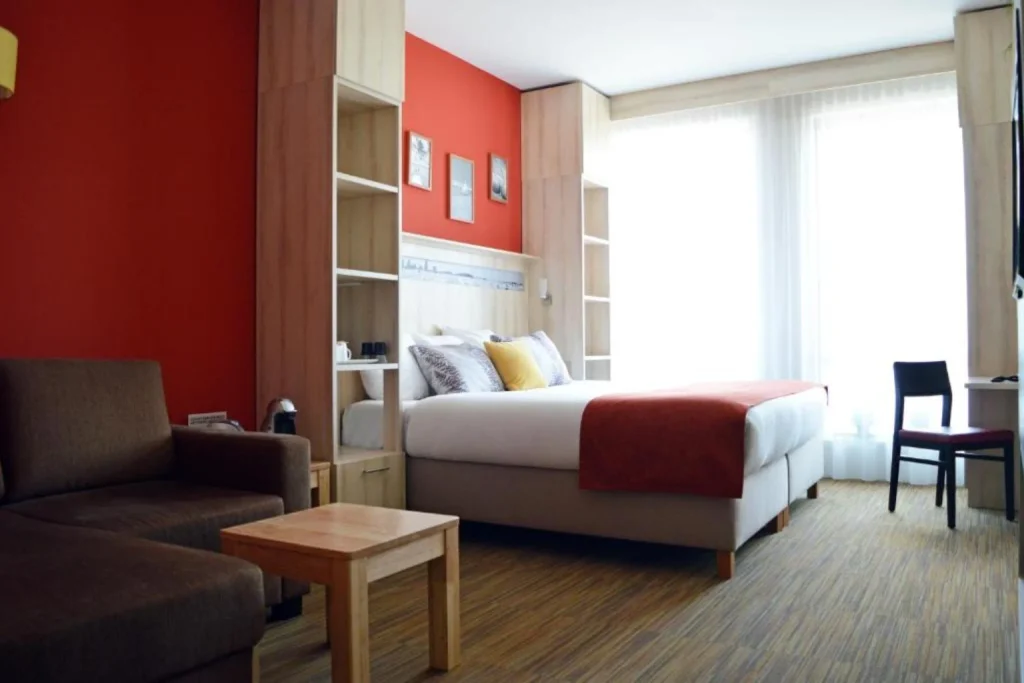
De Pijp blends hostels, small independents, and a few chain properties.
Why We Chose This Cluster
De Pijp repeatedly shows up in value‑for‑location rankings: not the absolute cheapest, but strong for travelers who want to walk to Museumplein, Heineken Experience, and the Albert Cuyp Market while still paying less than the canal belt.
Best For
- Couples who care more about food and nightlife than room size.
- Friends who want to split a basic room or share a hostel dorm.
- Short city breaks where location is everything.
Potential Downsides
- Peak‑season rates often push toward €120–€170 for basic rooms.
- Noise from bars and trams, especially on main streets.
Key Highlights (Typical for the Area)
- Free Wi‑Fi; breakfast may be extra or limited.
- Tiny rooms but with private bathrooms in cheap hotels.
- Strong bar and restaurant scene within a short walk.
5. Oud‑West: “Budget Boutique” For Those With a Bit More
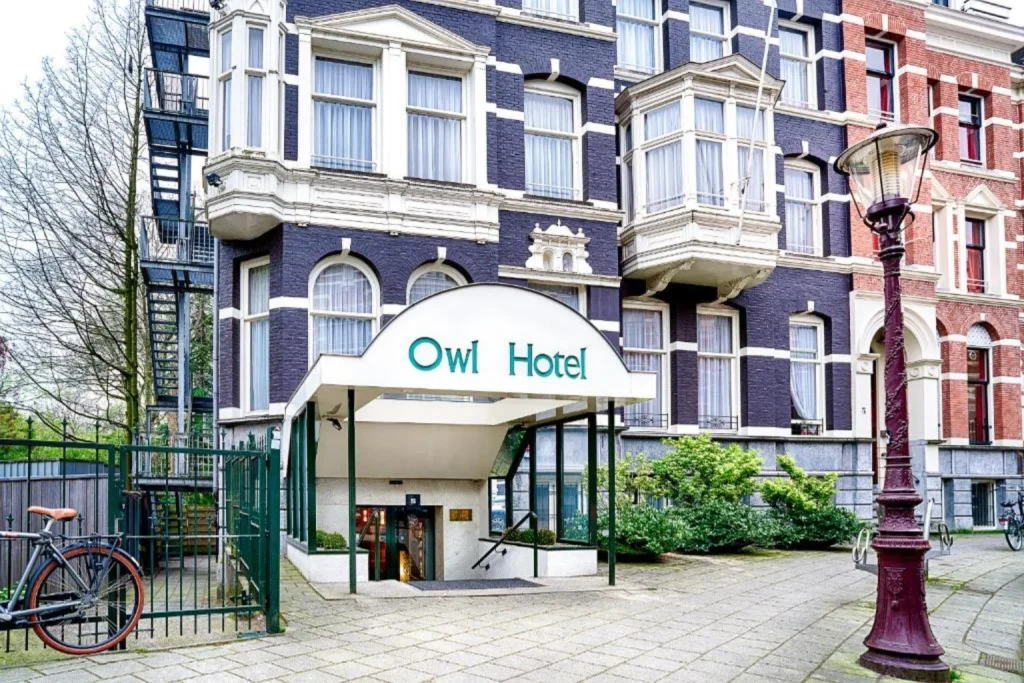
Oud‑West offers indie hotels that feel more boutique than bare‑bones.
Why We Chose This Cluster
Prices here are higher than classic budget, but off‑season or early‑booked deals can drop into the €90–€130 band, making it a smart pick for travelers who care about both design and cost.
Best For
- Couples and friends who want Vondelpark nearby and easy tram access.
- Travelers willing to pay slightly more for a nicer common area or more personality.
Potential Downsides
- Summer 2026 rates often hover around €140–€180, which is edging into mid‑range.
- Some hotels have very small lifts or narrow staircases due to historic buildings.
Key Highlights (Typical for the Area)
- Free Wi‑Fi, sometimes free tea/coffee in lounges.
- Easy walk or bike ride to the canal belt and museums.
- Food halls and bars close by, but quieter back streets for sleep.
6. Budget Hotels Near Central Station
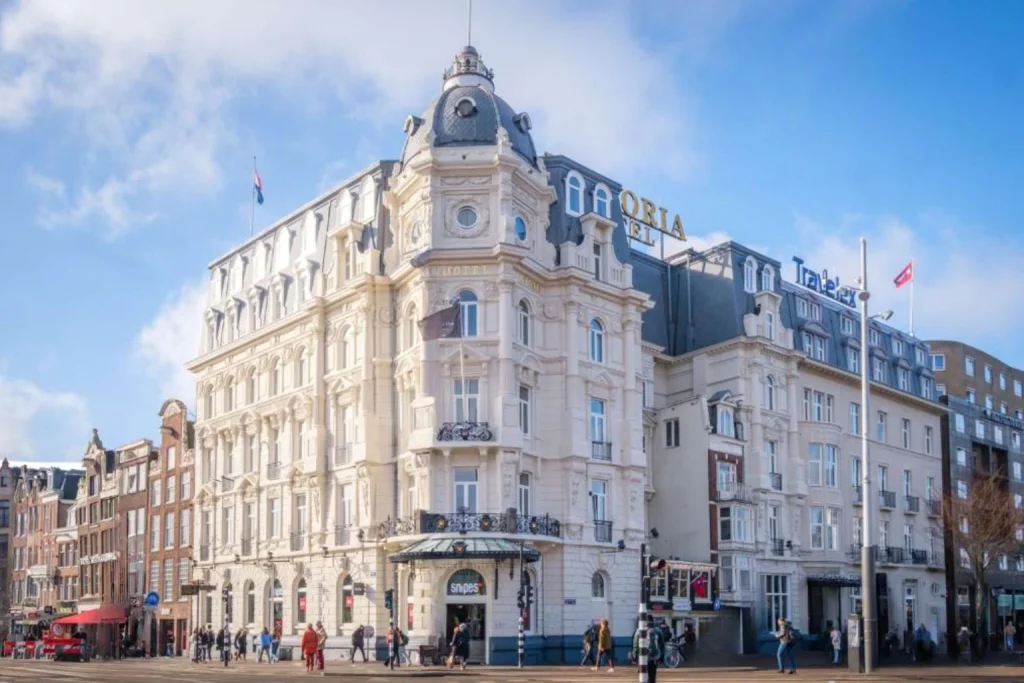
Immediately around Amsterdam Centraal you’ll find small hotels squeezed into historic buildings, plus a few modern chains billing themselves as “budget.”
Why We Chose This Cluster
For rushed city breaks, rail trips, or cruise departures, location often outranks everything. These hotels place you within walking distance of many major sights.
Best For
- One‑ or two‑night stays before/after a train or cruise.
- Travelers with heavy luggage who don’t want to navigate trams or bikes.
- First‑timers who prefer simplicity.
Potential Downsides
- Among the highest prices for budget‑level comfort: often €130–€190 in summer for very small rooms.
- Street noise and nightlife right outside.
- Rooms can be basic and worn in older buildings.
Key Highlights (Typical for the Area)
- Free Wi‑Fi, TVs, 24‑hour desk.
- Direct access to long‑distance trains, airport trains, ferries, and city trams.
7. Airport (Schiphol) Budget Hotels

The Schiphol area has a dense ring of budget and mid‑range chain hotels, many running shuttle buses.
Why We Chose This Cluster
Data for 2026 puts airport hotels in the absolute cheapest band, with some of the city’s lowest headline rates across the year, including options around €80 in many periods.
Best For
- Late arrivals / early departures.
- Travelers on very tight budgets willing to commute.
- Road‑trippers or those picking up rental cars.
Potential Downsides
- You’ll spend 15–30 minutes each way going into Amsterdam and back, plus transport costs.
- Area feels like any other airport district, with limited local character.
Key Highlights (Typical for the Area)
- Strong Wi‑Fi, TVs, private bathrooms standard.
- Many hotels with A/C and soundproofing.
- On‑site bar/restaurant and simple breakfast options.
What Amenities to Expect in Cheap Amsterdam Hotels (2026)
Across most budget hotels and many hostels in Amsterdam, you can reliably expect:
- Free Wi‑Fi as standard.
- TVs in hotel rooms.
- 24‑hour reception in most purpose‑built hotels.
- Compact rooms, often 12–18 m², especially in older buildings.
- Luggage storage for early arrivals or late departures at many properties.
- Bike rentals on‑site or via a partner shop; some hotels lend bikes.
Food and drink:
- Breakfast: Sometimes included in the rate at cheaper neighborhood hotels, often a paid extra at central chains. Many travelers skip hotel breakfast and use nearby bakeries to save money.
- Self‑catering: Hostels and some aparthotels offer communal kitchens or kitchenettes. Even a kettle and mini‑fridge can help cut drink and snack costs.
- Bars/cafés: Many budget stays now have a casual bar, coffee corner, or café in the lobby with simple menus.
Less consistent amenities:
- Air conditioning: Common in newer chain hotels and airport/Sloterdijk properties; not guaranteed in older canal‑house or indie hotels.
- Fitness/sauna/pool: Rare in true budget stays; expect to go without.
- Pets: Some budget properties allow pets, sometimes for a fee.
- Shared bathrooms: Still used in the lowest‑priced rooms in some hostels and ultra‑budget hotels.
Booking Tips for Cheap Hotels in Amsterdam in 2026
When to Book
Amsterdam’s hotel market is tight, with tourist caps and bans on new hotel construction keeping supply limited while demand stays high.
For budget travelers:
- Peak season (June–August): Book months ahead if you want private rooms under €150–€160 near the center.
- Shoulder season (April–May, September–October): Often the best balance of price and weather, especially outside major events.
- Low season (November–March): Deepest discounts, aside from New Year and some events.
For flights, 2026 research points to:
- International trips: Booking 31–45 days, or up to 50–101 days, ahead often produces better fares than very early or late booking.
- Avoid booking flights more than 6 months out or inside 3 weeks of departure if your goal is the lowest fares.
While this is flight data rather than hotel‑specific, the principle carries over: mid‑range booking windows typically beat very early or last‑minute for popular cities like Amsterdam.
How to Find Deals
- Compare on meta‑search tools like Google Hotels, which have been shown to surface lower average package prices than some individual OTAs.
- Be flexible with neighborhoods: searching Noord, Sloterdijk, Oost, and Schiphol often reveals significantly lower prices for similar room standards.
- Experiment with date shifts of ±1–3 days — a mid‑week arrival can reduce both flight and room costs compared with a Friday start.
- Look at hostels with private rooms: they can be cheaper than hotels with similar locations and often include social spaces.
Avoiding Hidden Costs
Watch for:
- City tourist tax and higher VAT: check whether prices are “including all taxes” before comparing.
- Breakfast charges: add up daily breakfast costs and compare with what you’d spend at nearby cafés.
- Cleaning or service fees in aparthotels or apartment‑style stays.
- Late check‑out / early check‑in fees if you have awkward flight times.
- Card surcharges or deposit requirements in smaller properties.
A practical tactic: take the total stay price, divide by the number of nights, and use that as your real nightly cost when comparing.
Safety, Accessibility, and Family Considerations
Safety
Amsterdam is generally safe, but budget areas can be near busy stations or nightlife.
- Around Centraal, watch for pickpockets, especially at night and on trams.
- In Noord and Oost, most streets are residential and calm, but check recent reviews for comments on late‑night noise or security.
Look for hotels that mention:
- 24‑hour reception.
- Key‑card access to elevators or upper floors.
- Positive mentions of staff support in guest reviews.
Accessibility
Historic buildings often mean narrow staircases and small lifts, especially in canal areas.
If accessibility matters:
- Focus on newer chain hotels in Sloterdijk, Schiphol, and some Noord/Oost properties, which are more likely to have step‑free access and larger elevators.
- Check whether the hotel confirms accessible rooms and roll‑in showers; not all budget properties have them.
Families
For families, cheap doesn’t always equal good value.
- Look for family rooms or connecting rooms in budget chains; this can be cheaper than booking two separate doubles at a central boutique.
- Areas like Oost, Noord, and some parts of Oud‑West work well for kids because they’re close to parks and less hectic at night.
- Hostels can be an option for older children or teenagers if you reserve a private dorm for the family.
Always verify:
- Whether extra beds or cribs are available and at what cost.
- If there’s a quiet hours policy, useful when traveling with younger kids.
How Amsterdam’s 2026 Hotel Market Differs From Previous Years
Key shifts between 2024 and 2026:
- Base room rates have softened slightly after 2023’s peak and the 2024 correction, with small declines projected through 2025–2026.
- Tourist tax increased sharply earlier in the decade and remains high.
- VAT on hotel stays jumped from 9% to 21% in 2026, which means total bills are higher even when nightly base rates drop by a few percent.
- City policies, including a tourist cap and a ban on new hotels, keep supply tight, supporting higher effective prices.
For you, the budget traveler, that means:
- Don’t be fooled by slightly lower “base rate” headlines. Always check the all‑in price including taxes.
- Cheaper neighborhoods and off‑season stays matter more than ever for keeping total costs reasonable.
FAQ: Cheap Hotels in Amsterdam (2026)
What’s a realistic nightly budget for a cheap hotel in Amsterdam in 2026?
For a simple 2–3‑star hotel or a private hostel room, expect about €90–€180 per night depending on area and season. In July–August, it often rises toward €160–€240, especially centrally.
Which areas combine lower prices with good access to the center?
Amsterdam‑Noord and Sloterdijk/Westpoort offer some of the best trade‑offs: cheaper rooms, modern buildings, and quick links to Amsterdam Centraal via ferry or train. Oost also balances local feel and lower prices with decent tram/metro access.
Can I find a private room under €100 in July?
It’s difficult, but not impossible. You’re most likely to find it by:
- Staying in Noord, Oost, Zuidoost, or near Schiphol.
- Booking months ahead.
- Considering hostel private rooms instead of hotels.
Central canal or Jordaan locations under €100 in peak summer are rare.
Are hostels a good option if I want comfort, not just the lowest price?
Yes, as long as you choose hostels with private en‑suite rooms and strong guest ratings. Many modern hostels in Amsterdam now function as social budget hotels, with added perks like bars, shared kitchens, and organized events.
What amenities should I expect from a cheap Amsterdam hotel?
You can usually count on free Wi‑Fi, a TV, private bathroom, compact room size, and 24‑hour reception in standard budget hotels. Breakfast may or may not be included; self‑catering facilities are more common in hostels and aparthotels.
How can I avoid disappointing budget stays?
- Stick to properties with recent reviews and a solid average score on major booking sites.
- Read comments specifically about cleanliness, noise, room size, and A/C.
- Be realistic about how small cheap rooms can be and prioritize location and cleanliness over décor.
Is it cheaper to stay near Schiphol and commute?
On many dates, yes. Airport‑area hotels often sit in the lowest base‑rate band. Whether it’s worth it depends on how much you value:
- Extra commuting time (15–30 minutes each way).
- Train/bus costs for each day you head into Amsterdam.
- Being in the city at night versus near the terminal.
Conclusion: How to Make a Cheap Hotel in Amsterdam Work for You
To keep Amsterdam affordable in 2026, focus on where and when you book more than on chasing a specific hotel name. Amsterdam‑Noord, Sloterdijk, and Oost usually give you the best price‑to‑comfort ratio, while De Pijp and Oud‑West work well if you’re willing to pay a bit more for livelier surroundings.
Before you lock anything in, compare the total price with taxes, check recent reviews for noise and cleanliness, and decide how much your time commuting is worth versus a more central but pricier room. With realistic expectations and some flexibility on neighborhoods and dates, you can still keep your Amsterdam stay cheap enough to save your euros for bikes, cafés, and canal cruises instead of your bed.

Alison is a travel writer passionate about solo adventures, photography, and memorable getaways. She loves discovering beautiful destinations, distinctive stays, authentic local experiences, and hidden gems, creating stories that help curious travelers explore beyond the usual tourist highlights. Her work has been featured in Forbes, CNN, Travel + Leisure, Yahoo, and other major outlets.