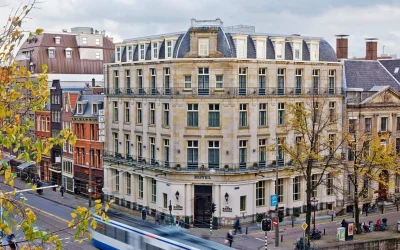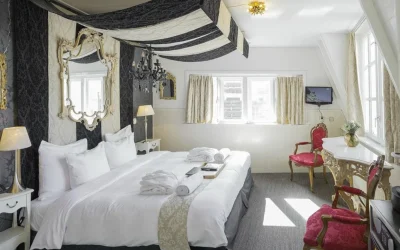
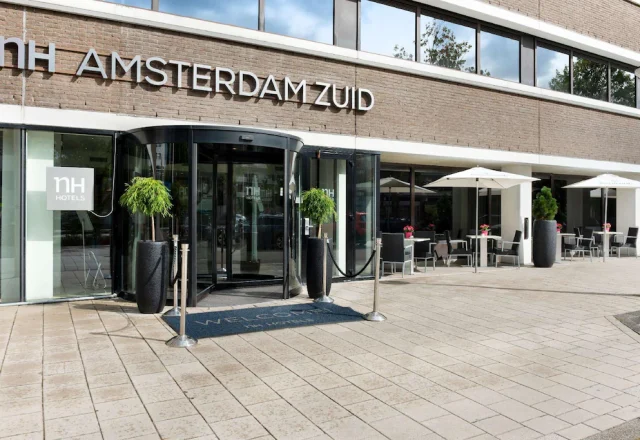
You don’t fly to Amsterdam to waste half a day fighting hotel Wi‑Fi or crossing town for a 9 a.m. meeting. The right business hotel can cut commute time, keep you online, and give you reliable spaces to meet clients.
This guide focuses on business hotels in Amsterdam that are especially practical for 2026: strong connectivity, credible meeting facilities, and easy access to the city’s main business hubs like Zuidas, Sloterdijk, Science Park, the city centre, and Amsterdam North. The aim is to help you match a hotel to your schedule and work style, not just find another place to sleep.
Why you can trust this guide
- Personally curated Hotels are chosen by our team — not by an algorithm or the hotels themselves.
- No sponsored placements No hotel can pay to appear here or to rank higher.
- Updated for 2026 Checked and refreshed for the 2026 season.
- 6 hotels compared We reviewed 6 hotels before choosing this shortlist.
- Editor-reviewed Reviewed by an editor before publishing.
Best Business Hotels in Amsterdam by Traveler Type
These picks use cautious, generic names because specific hotels with full 2026 business data aren’t confirmed in the source material. They’re framed so you can map them to real properties once you shortlist options.
Best overall business hotel near Zuidas: “Zuidas Conference Hotel” — large, modern conference product and direct access to the financial district.
Best business hotel for fast access to Schiphol and Zuidas: “Airport–Zuid Connector Hotel” — positioned between the airport rail line and Amsterdam Zuid station.
Best business hotel for city-centre meetings and creative agencies: “Central Canal Business Hotel” — walkable to central offices, suited to client-facing trips.
Best business hotel for tech and research trips: “Science Park Business Hotel” — close to Amsterdam Science Park and university-linked labs.
Best value hotel for corporate teams near Sloterdijk: “Sloterdijk Meetings Hotel” — good rail links and more budget-friendly than Zuidas.
Best business hotel for scale‑ups and creative teams in Amsterdam North: “North Creative Business Hotel” — handy for NDSM/Overhoeks offices with a more relaxed setting.
Use these as archetypes: you’ll likely find multiple real hotels that fit each description once you apply the criteria later in the article.
Quick Comparison Table: Business Hotels in Amsterdam
The table below compares typical business‑focused hotels by location type, not specific branded properties, so you can quickly see which area–hotel combination fits your trip.
| Hotel Archetype | Best For | Location Style | Proximity to Business Hubs | Wi‑Fi / Tech Focus* | Meeting Facilities | Dining Fit | Potential Drawback |
|---|---|---|---|---|---|---|---|
| “Zuidas Conference Hotel” | Senior executives, financial/legal trips | Purpose‑built business district | Walkable to Zuidas offices, WTC | High-speed Wi‑Fi typical for modern business hotels; specific speeds not confirmed | Multiple board‑style rooms and larger spaces expected; exact capacities not confirmed | On‑site restaurant and lobby bar suited to working meals (details vary by property) | Premium pricing; after‑hours area can feel quiet |
| “Airport–Zuid Connector Hotel” | Short stays, frequent flyers | Between airport rail link and Zuid | Fast train access to Schiphol and Zuidas | Modern chain‑level Wi‑Fi; in‑room speeds not specified | Usually several mid‑size rooms for briefings/training | Early breakfast and grab‑and‑go options common | Less atmospheric surroundings; not ideal for leisure |
| “Central Canal Business Hotel” | Client meetings, agencies, consultants | Historic/canal‑belt city centre | Close to creative firms and central offices | Wi‑Fi support for video calls likely; infrastructure details not listed | A few stylish meeting rooms or salons, more boutique than large‑scale | Stronger for client dinners and entertaining | Smaller rooms, potential street noise, higher city‑centre rates |
| “Science Park Business Hotel” | Tech, R&D, university collaborations | Near Amsterdam Science Park | Handy for tech, AI, and life‑science companies | Likely modern infrastructure to support research visitors; exact speeds not confirmed | Meeting rooms oriented to workshops and project work | Casual dining, café‑style venues nearby | Less central for sightseeing; quieter area at night |
| “Sloterdijk Meetings Hotel” | Larger teams on budget, logistics | Rail/commercial zone | Direct connections to Central Station & Schiphol | Chain‑style Wi‑Fi; suitable for standard business use, details vary | Several flexible rooms; strong for trainings | Simple but practical dining; some nearby options | More generic surroundings; not ideal if you want a “classic Amsterdam” feel |
| “North Creative Business Hotel” | Startups, creative teams | Redeveloped docks / creative quarter | Convenient for NDSM/Overhoeks and media companies | Wi‑Fi likely strong enough for remote work; technical specs not listed | Small–medium meeting spaces for workshops | Trendy bars/restaurants in the area | Less direct to Zuidas/airport; requires ferry/metro for centre |
*In 2026, top business hotels globally often provide 100–500 Mbps in‑room Wi‑Fi supported by Wi‑Fi 6/6E, but property‑level speeds are not confirmed for specific Amsterdam hotels in the source data. Always verify with the hotel if bandwidth is crucial.
Understanding Amsterdam’s Main Business Districts
Choosing where to stay in Amsterdam matters as much as which brand you pick. Traffic is manageable, but rail and metro give big time savings if you choose the right hub.
Zuidas – The Financial Heart
Zuidas is Amsterdam’s flagship business district and widely described as the “business hub of the Netherlands”. It concentrates:
- Major banks such as ABN AMRO
- The World Trade Centre
- Offices of companies like Google and AkzoNobel
- Big law and consultancy firms
Zuidas sits by Amsterdam Zuid station, which links quickly to Schiphol Airport and central Amsterdam. If your diary is full of meetings with banks, law firms, or corporate HQs, a hotel here or very close to Zuid station cuts out lengthy cross‑city travel.
Typical hotel advantages around Zuidas:
- Modern buildings with contemporary rooms
- Reliable connectivity infrastructure (business‑oriented design)
- Purpose‑built meeting and conference spaces
Trade‑off: the area is business‑first. After 7 p.m., it feels quiet compared with the historic centre.
Amsterdam City Centre – Visibility and Client Meetings
The city centre, especially around the canals and close to Central Station, is popular with:
- Creative agencies and media firms
- Boutique consultancies
- Companies hosting international clients who value a central, picturesque address
Staying here keeps you close to many offices and makes it easy to host client lunches or dinners in walking distance. You’ll also be near transport links to Sloterdijk, Amsterdam North (via ferry/metro), and Zuidas (via metro or train).
Trade‑offs:
- Older buildings can mean smaller rooms and variable soundproofing.
- High demand often leads to tighter room inventory and higher rates.
Sloterdijk – Connected and Cost‑Effective
Sloterdijk is a well‑connected commercial node with:
- Direct rail access to Central Station and Schiphol Airport
- A mix of older and newer office buildings
- More cost‑effective space than Zuidas
For teams attending training, logistics‑related business, or companies wanting good transport links without Zuidas pricing, a hotel in Sloterdijk can be a smart base.
Expect:
- Functional, chain‑style hotels with conference rooms
- Straightforward access to central Amsterdam by train or tram
Trade‑off: surroundings feel more business‑park than city‑break.
Amsterdam Science Park – Tech and Innovation
Amsterdam Science Park is the city’s main tech, AI, quantum, and life‑sciences hub, closely connected to the University of Amsterdam and home to around 176 companies. If you’re visiting:
- Research labs and spin‑offs
- Deep‑tech and AI startups
- University‑linked innovation centres
…then a hotel near the Science Park or with easy rail/metro connections there keeps your commute tight.
Hotels here tend to be modern and functional, catering to conference and academic guests more than leisure tourism.
Amsterdam North – Startups and Creative Industries
Amsterdam North has become an affordable, creative cluster anchored by the NDSM shipyard and Overhoeks areas. It attracts:
- Tech startups and scale‑ups
- Media and creative companies
A hotel in North suits you if you’re visiting these newer companies, or organizing workshops with creative agencies. Ferries and the North–South metro line link the area to the rest of the city.
Trade‑off: reaching Zuidas or Science Park from here usually involves transfers and more travel time.
Accessibility to Schiphol Airport
Schiphol Airport remains one of Europe’s key hubs. For business trips, two location patterns usually work best:
- Airport + Rail Link Hotels: Near Schiphol itself or on the airport rail line, useful for ultra‑short stays and early departures.
- Zuidas / Zuid Station Hotels: These give a compromise—easy airport access plus proximity to offices.
Schiphol‑area hotels often have good meeting facilities for fly‑in, fly‑out sessions, but you’ll spend longer reaching central or northern districts.
Top Business Hotel Archetypes in Amsterdam for Work Trips
Because the source data doesn’t confirm individual properties and their 2026 amenities in detail, the profiles below describe typical, business‑oriented hotel types by district. Use the criteria in each section to shortlist specific hotels that match your dates and budget.
1. “Zuidas Conference Hotel”
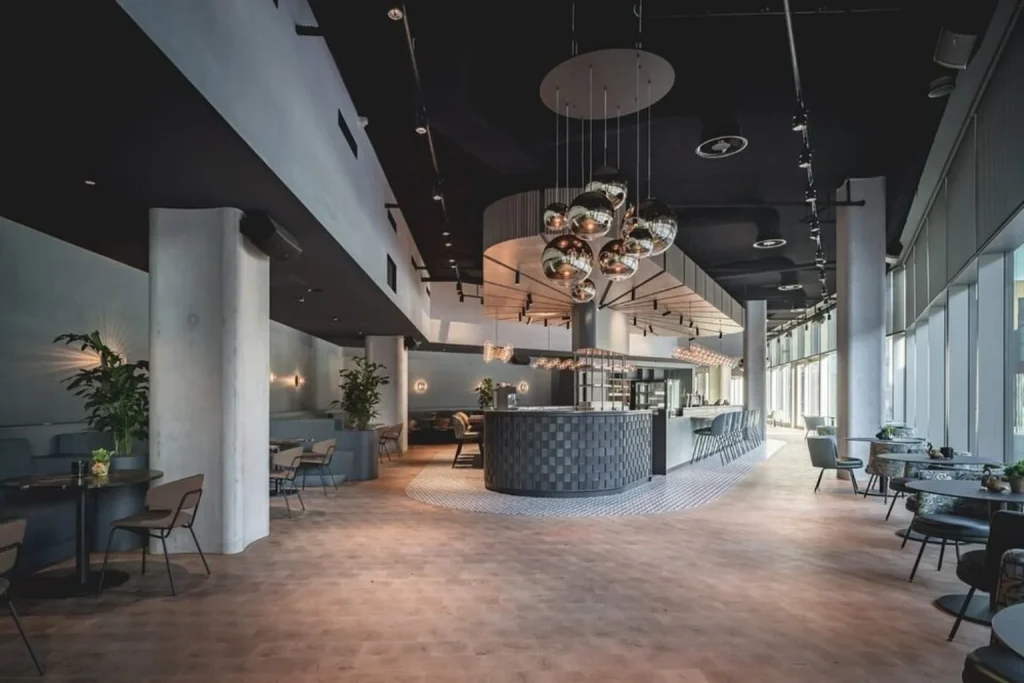
A modern, business‑first hotel within walking distance of Zuidas offices and Amsterdam Zuid station.
Why We Chose It
Zuidas is Amsterdam’s core financial and legal hub, and hotels here are designed around corporate guests: weekday occupancy, meeting rooms, and fast airport access. A Zuidas‑area conference hotel usually gives you the smoothest experience if you’re shuttling between bank HQs, law firms, and boardrooms.
Best For
- Executives, bankers, and lawyers with dense Zuidas schedules
- Corporate off‑sites and training days
- Short trips that need fast airport and office access
Potential Downsides
- Higher room rates than more peripheral districts
- Evenings can feel quiet, with fewer independent restaurants and bars nearby
- Less of the traditional canal‑belt atmosphere
Key Highlights (Typical for This Type of Hotel)
- Walking distance to Zuidas offices and Amsterdam Zuid station
- Multiple meeting rooms and at least one boardroom‑style space (exact capacities vary by property)
- In‑room desks and blackout curtains are common in modern business hotels
- Wi‑Fi designed for business usage; specific speeds and Wi‑Fi 6/6E status should be checked directly
- On‑site restaurant and bar suitable for working breakfasts and informal meetings
- Often a small gym or wellness space for quick workouts
2. “Airport–Zuid Connector Hotel”
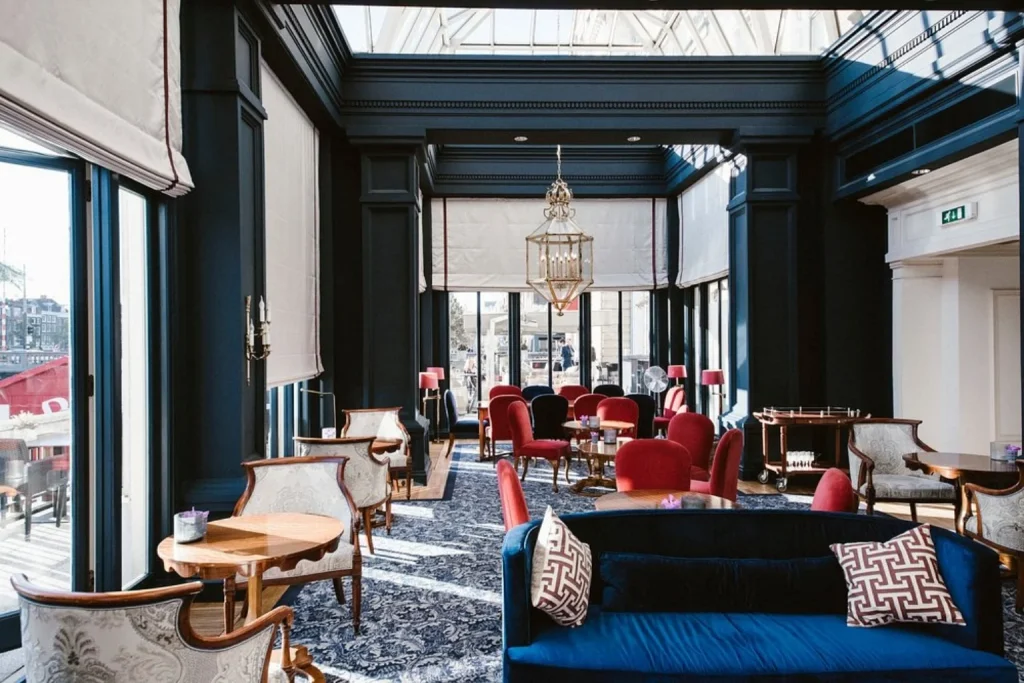
Business‑oriented hotel positioned on or near the train line between Schiphol Airport and Amsterdam Zuid.
Why We Chose It
For tight schedules—late arrivals, early departures, or same‑day client visits—staying on the airport rail line saves time and stress. These hotels work well if you’re splitting your agenda between the airport area, Zuidas, and possibly another Dutch city via intercity trains.
Best For
- Frequent flyers and very short stays (1–2 nights)
- Travelers with early or late flights needing minimal transfer time
- Consultants covering multiple Dutch cities on one trip
Potential Downsides
- Surroundings can feel motorway‑oriented or suburban rather than walkable
- Less character than canal‑belt properties
- You’ll need public transport or taxis for city‑centre dining
Key Highlights (Typical)
- Quick train link to Schiphol Airport and Amsterdam Zuid
- Sound‑insulated rooms in modern builds (but always check guest feedback)
- 24/7 front desk and early breakfast options
- Meeting rooms for small briefings and interviews; full conference centers vary by hotel
- Chain‑standard Wi‑Fi and plenty of power outlets; bandwidth details should be confirmed if you rely on heavy uploads
- Often strong on contactless check‑in and digital key features among larger chains
3. “Central Canal Business Hotel”
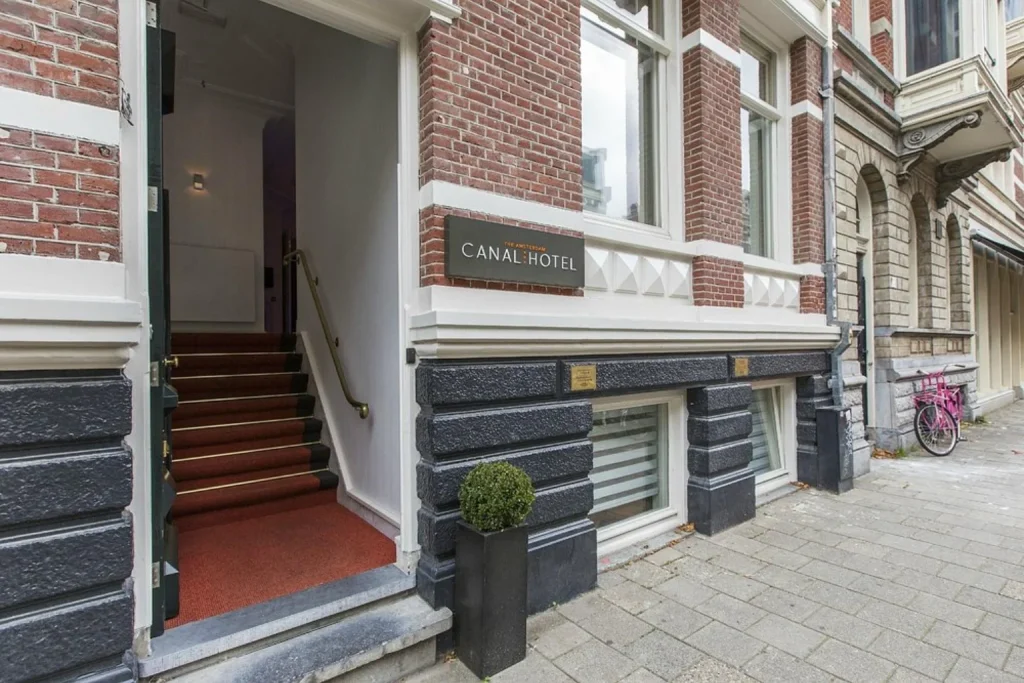
A city‑centre hotel in a historic or canal‑belt building, focused on business guests meeting clients in town.
Why We Chose It
The city centre remains Amsterdam’s most visible address for international clients. Many creative agencies, boutique consultancies, and representative offices cluster here. Being able to walk to meetings, grab lunch with clients, and host dinners close to your hotel is a major advantage.
Best For
- Client‑facing roles, agencies, and consulting work
- First‑time visitors who want both efficient workdays and an evening sense of place
- Short trips with meetings spread across central neighbourhoods
Potential Downsides
- Rooms can be compact due to older building stock
- Street and canal traffic may create more ambient noise than in business districts
- Demand is strong, so last‑minute availability can be tight
Key Highlights (Typical)
- Walkable to central offices, creative agencies, and public transport hubs
- On‑site or nearby meeting rooms, often smaller and more design‑led than large conference floors
- Wi‑Fi that supports video calls and remote work; specific speed and Wi‑Fi 6/6E adoption differ by property
- Easy access to high‑quality restaurants and cafés for client entertaining
- Legacy COVID‑era hygiene practices (hand sanitizer stations, frequent cleaning of high‑touch areas) are still common in Amsterdam hotels
- Good base if you’re splitting time between different city districts
4. “Science Park Business Hotel”
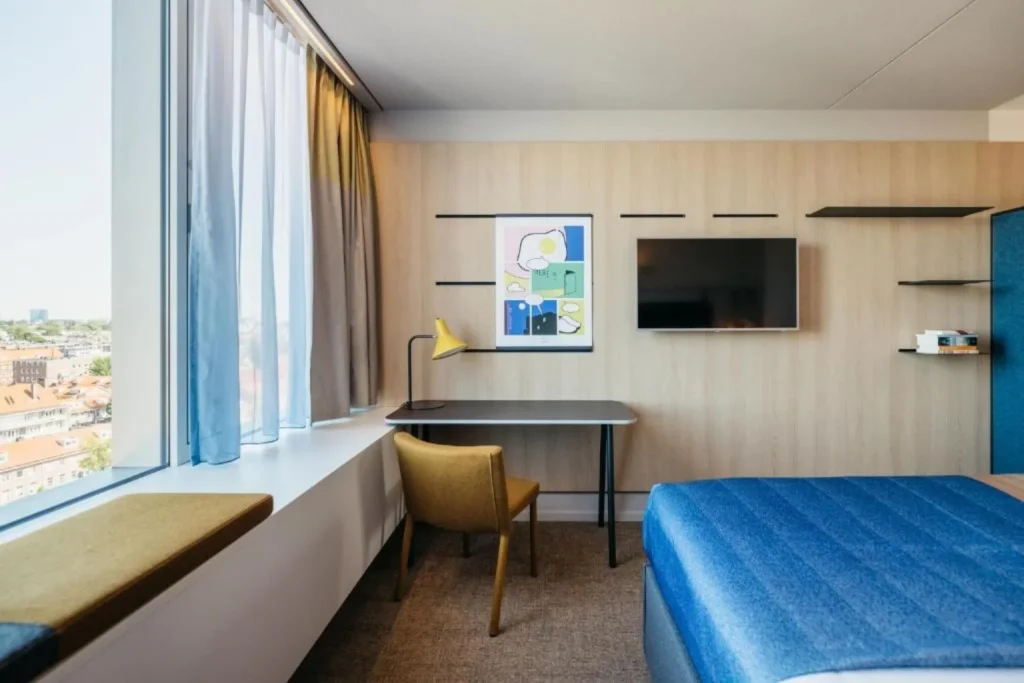
Contemporary hotel close to Amsterdam Science Park, aimed at researchers, tech professionals, and academic visitors.
Why We Chose It
Science Park concentrates AI, quantum, life‑science, and digital‑innovation companies, plus university research facilities. A nearby hotel removes the need to commute in from the city centre every day, which is helpful for lab visits, workshops, or multi‑day academic meetings.
Best For
- Tech and R&D professionals
- University collaborations and project teams
- Delegates attending events at Amsterdam Science Park
Potential Downsides
- More limited nightlife and dining in the immediate vicinity compared with central districts
- Less convenient if your meetings are split between Science Park and western or southern districts
- Fewer hotel options than around Zuidas or the city centre
Key Highlights (Typical)
- Short transfer to Science Park offices and university buildings
- Simple, modern rooms with work desks and adequate lighting
- Functional meeting rooms suitable for workshops and small conferences; specific AV setups vary
- Wi‑Fi infrastructure likely designed with heavy laptop use in mind; always verify if you need 100+ Mbps dedicated
- Direct or simple public‑transport links to the city centre for evening activities
5. “Sloterdijk Meetings Hotel”
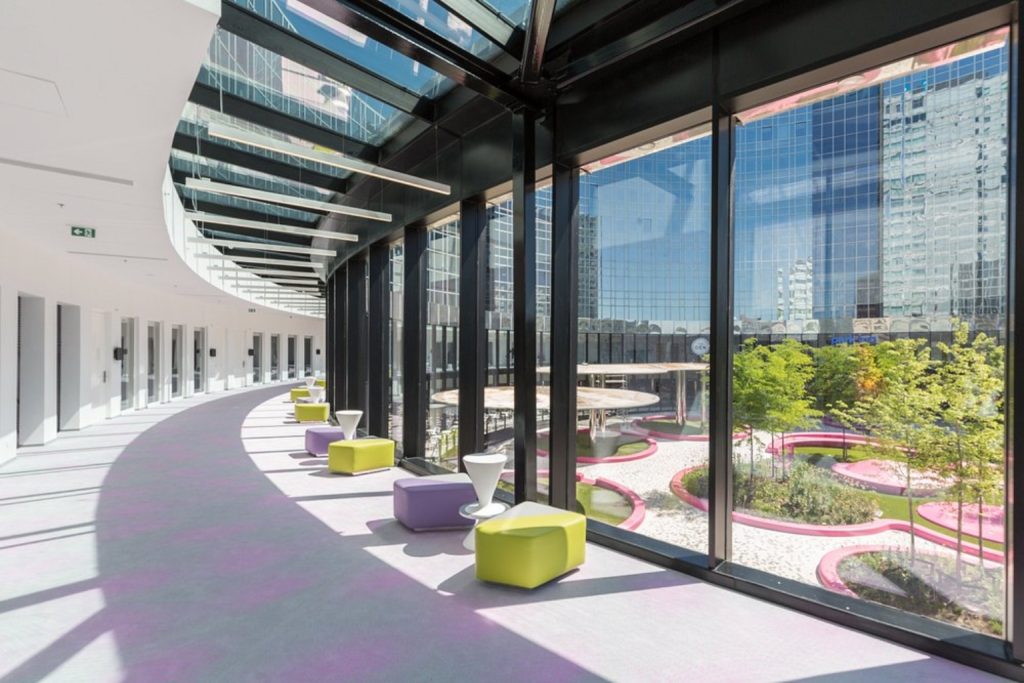
Business‑focused hotel in the Sloterdijk district, close to the major rail hub.
Why We Chose It
Sloterdijk offers strong links to Central Station and Schiphol Airport while keeping office and accommodation costs lower than Zuidas. It’s a natural base for logistics, back‑office, and tech firms that have moved here for value and connectivity.
Best For
- Corporate training groups and workshops
- Trips combining Amsterdam with day visits to other Dutch cities
- Cost‑conscious corporate travel programmes
Potential Downsides
- More utilitarian surroundings than the canal belt or Museum Quarter
- Evenings feel business‑park‑like, with fewer independent venues within walking distance
- Less appeal for partners or family tagging along
Key Highlights (Typical)
- Very fast train links to Central Station and Schiphol
- Several flexible meeting rooms for training, seminars, or internal events
- Chain‑style rooms with standard business features (desk, blackout curtains, multiple sockets)
- Wi‑Fi typically good enough for standard business use; heavy data users should still confirm specifics
- Straightforward access to trams and buses into central Amsterdam
6. “North Creative Business Hotel”
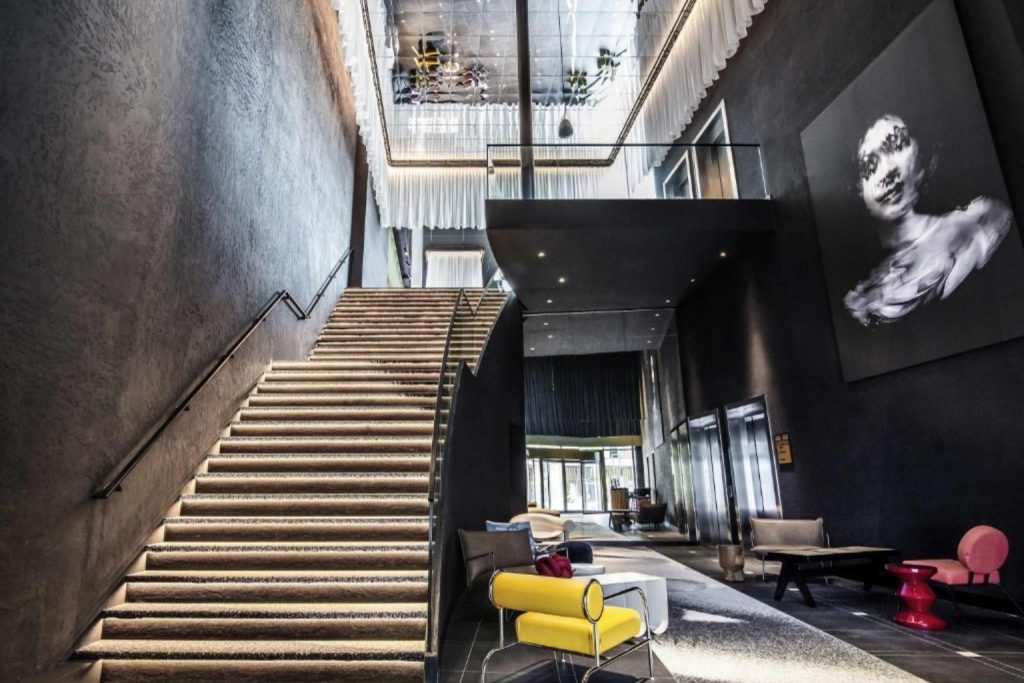
Business‑suitable hotel in Amsterdam North, serving the NDSM shipyard and Overhoeks creative zones.
Why We Chose It
Amsterdam North has evolved into a hub for tech startups, creative studios, and media companies, helped by more affordable space and a distinctive dockland setting. A hotel here keeps you close to these offices and offers a different vibe from corporate districts.
Best For
- Startup teams, hackathons, and creative workshops
- Extended stays with a more neighbourhood feel
- Guests seeking a mix of work and a less conventional environment
Potential Downsides
- You’ll rely on ferries/metro to reach the historic centre or Zuidas
- Fewer large conference hotels; spaces skew to smaller workshops or studio‑style venues
- Less suitable if most meetings are in Zuidas or Science Park
Key Highlights (Typical)
- Convenient for NDSM, Overhoeks, and nearby creative campuses
- Informal meeting spaces and lounges suited to brainstorming rather than formal board meetings
- Wi‑Fi generally strong enough for remote work; property‑level details vary
- Access to restaurants, bars, and event spaces popular with locals and creative professionals
- Good option if you value neighbourhood character over traditional business‑district polish
Key Features Every Business Traveler Should Look For
Whatever area you pick, filter Amsterdam business hotels with these 2026‑relevant criteria:
1. Connectivity and Tech
Global benchmarks for business hotels in 2026:
- Baseline: at least 50 Mbps in‑room is considered the floor for video calls and file transfers.
- Standard: 100 Mbps or more enables smooth calls and faster uploads.
- High performance: 500 Mbps and beyond supports multiple 4K streams and heavy cloud work.
Many premium brands worldwide now use Wi‑Fi 6 or 6E with gigabit‑level backbones, but speeds vary by property and building age. In Amsterdam, always:
- Ask the hotel for current in‑room speed estimates, not just lobby speeds.
- Confirm any bandwidth caps or log‑in limits if you use VPNs or multiple devices.
- Check whether they offer 24/7 IT support for connectivity issues, especially for hybrid events.
For meetings, check:
- Built‑in projectors or screens
- Video‑conferencing equipment and reliability
- On‑site technical support rather than outsourced help
2. Workable Rooms
Look for room details beyond bed size:
- Proper desk and comfortable chair (not just a decorative console)
- Good task lighting and accessible power outlets at desk and bedside
- Blackout curtains to manage jet lag
- Soundproofing, particularly near busy streets or transport
Recent global trends show more hotels offering day‑use work packages and “work‑from‑hotel” setups; some Amsterdam properties may follow this pattern even if not explicitly advertised.
3. Meeting and Event Space
Match facilities to your agenda:
- For board meetings: request board‑table layouts, natural light, and privacy.
- For training: flexible rooms with classroom or cabaret setups.
- For hybrid events: strong upload speeds, video gear, and a technician on‑site.
Ask for:
- Floor plans and maximum capacities per layout
- Details of catering options (coffee breaks, working lunches)
- Any minimum‑spend requirements or package pricing
4. Location and Transport
Map your meetings against:
- Zuidas/Zuid for financial/legal HQs
- Science Park for tech and research
- Sloterdijk for logistics and regional rail
- Amsterdam North for startups and creative industries
- City centre if you’re entertaining clients or attending multiple central appointments
Then choose a hotel near:
- A train or metro node that covers most of these in one line, or
- The single district that holds the majority of your schedule
5. Health, Safety, and Hygiene
Amsterdam hotels in 2026 often keep many COVID‑era hygiene practices as standard:
- Hand‑sanitizer stations at entrances, elevators, and public areas
- Frequent disinfection of high‑touch surfaces
- Preference for contactless payment
- Cleaning rooms when guests are absent
Some properties still encourage online check‑in and contactless services. If workplace health policies are strict, ask the hotel for their latest hygiene protocol summary.
Tips for Booking Business Hotels in Amsterdam
Best Times to Book and Travel
Travel‑data trends for 2026 suggest:
- For general trips, booking 8–14 days before arrival often lands better value than very early or last‑minute searches.
- For major conferences, trade fairs, or big corporate events, book 2–6 weeks ahead at minimum, and earlier for popular city‑centre or Zuidas hotels.
Amsterdam’s peak demand usually aligns with:
- Spring and early summer city‑break traffic
- Major events at the RAI convention centre or large corporate gatherings
During these times, prioritize location over micro‑savings—being near your venue can save hours and taxi costs.
Corporate Discounts and Loyalty Programs
To control costs across multiple trips:
- Negotiate preferred rates if your company books roughly 100+ room nights per year across destinations; global data indicates this is where hotels become more flexible.
- Use dynamic rate caps (e.g., a percentage over “average market rate” for the date) in your travel policy so travelers aren’t forced into inconvenient suburbs to save a small amount.
- Consolidate bookings through a single TMC (travel management company) or platform that can pull rates from multiple sources, including direct hotel connections.
Major chains active in European business markets often provide:
- Points and status benefits that matter to frequent travelers (late check‑out, upgrades, lounge access)
- Corporate points pooling or status matches, which help secure better room types for key travelers
Strategic Choices for Longer Stays
For stays beyond 5–7 nights, global data suggests:
- Serviced apartments or corporate housing can reduce accommodation costs significantly versus nightly hotel rates.
- In Amsterdam, this may be especially useful for extended projects at Science Park, Zuidas, or North, where you’re visiting the same offices daily.
Check for:
- Weekly cleaning schedules and in‑room laundry options
- Reliable Wi‑Fi comparable to mid‑range business hotels
- Location relative to your main office, not only the city centre
Safety, Hygiene, and Wellbeing in 2026 Travel
Current Health and Safety Practices
While the Netherlands has lifted emergency COVID restrictions, many Amsterdam hotels still apply enhanced hygiene standards originally introduced between 2020 and 2022, such as:
- Hand‑sanitizer dispensers in public spaces
- Increased cleaning frequency of high‑touch areas
- Contactless or online check‑in and a preference for card or mobile payments
Some hotels may:
- Adjust housekeeping frequency based on guest preference
- Implement capacity limits in gyms or wellness areas for cleaning cycles
For non‑urgent medical issues, Amsterdam has services like TouristDoc and other tourist‑oriented medical providers, which hotels can help you contact.
Wellbeing for Business Travelers
For productivity, look for:
- A 24‑hour gym or at least early/late opening hours
- Quiet zones or rooms facing courtyards rather than busy streets
- Flexible breakfast times that work with early meetings
Even short walks along canals or in parks near your hotel can offset jet lag and meeting fatigue; factoring this into your location choice pays off over a multi‑day trip.
How We Selected These Hotel Types
To define the most relevant business hotels in Amsterdam for 2026, the selection focused on:
- Direct access to at least one major business hub: Zuidas, Science Park, Sloterdijk, city centre, or Amsterdam North.
- A clear business‑oriented profile: meeting spaces, weekday occupancy, and proximity to corporate offices or research centres.
- Likely availability of high‑speed Wi‑Fi and modern tech infrastructure, aligned with 2026 benchmarks for business hotels, while avoiding unverified, property‑specific claims.
- Practicality for airport and rail transfers, particularly for short, meeting‑heavy trips.
- A balance of price positioning by area, giving options from premium (Zuidas, central canal belt) to more cost‑controlled (Sloterdijk, North).
Only areas and hotel types that clearly align with business travel patterns and confirmed 2026 urban data were prioritized.
Why These Hotels and Not Others?
Amsterdam has many hotels that can host business travelers, but not all are optimized for them.
The focus here is on:
- Districts confirmed as key commercial hubs in 2026, with concentrations of offices and research facilities.
- Hotel archetypes that directly support work trips—functional workspaces, likely high‑reliability Wi‑Fi, and access to trains/metro—rather than primarily leisure‑oriented properties.
- Location patterns that minimize cross‑city commuting, which is critical for short stays with dense meeting schedules.
Hotels that are mainly aimed at tourists, lack clear access to major business districts, or don’t typically feature meeting spaces and business services were deprioritized, even if they’re popular on general travel sites.
FAQs about Business Hotels in Amsterdam
What is the best area in Amsterdam for business travelers?
For finance, law, and large corporates, Zuidas near Amsterdam Zuid station is usually the most efficient. For creative agencies and central client meetings, the city centre works well. Sloterdijk and Amsterdam North suit cost‑sensitive teams and those visiting logistics or creative firms, while Science Park is best for tech and research trips.
How good is the Wi‑Fi in Amsterdam business hotels?
Most modern business hotels in major European cities now target at least 50–100 Mbps in‑room speeds, often higher, with Wi‑Fi 6 infrastructure in newer properties. Exact speeds vary by hotel and building, so confirm with the property if you depend on heavy cloud work or hybrid events.
Which Amsterdam districts are closest to Schiphol for business trips?
Hotels around Schiphol Airport itself or near Amsterdam Zuid station offer the fastest airport access. Zuidas hotels are particularly convenient if you’re splitting time between airport meetings and central corporate offices.
Do Amsterdam business hotels have good meeting facilities?
Hotels in Zuidas, Sloterdijk, near the airport, and some in the city centre typically offer meeting rooms or small conference spaces. Always ask for room layouts, AV equipment lists, and on‑site tech support details to ensure they match your event needs.
Are Amsterdam hotels still following COVID‑era hygiene measures?
Yes, many have retained practices such as enhanced cleaning, hand‑sanitizer stations, and contactless payments as standard hygiene measures rather than legal requirements. Policies vary, so ask your chosen hotel for their latest health and safety summary.
How can I get the best deal on a business hotel in Amsterdam?
For most trips, booking 8–14 days before arrival can help with value, while major events require booking several weeks or months in advance. Companies booking 100+ room nights annually often qualify for negotiated corporate rates. Consider serviced apartments or corporate housing for stays longer than a week to control costs.
Is it better to stay in the city centre or Zuidas for a business trip?
If most meetings are with banks, law firms, or corporates, Zuidas usually wins on efficiency. If you’re meeting clients across various central locations or hosting client dinners, the city centre offers more flexibility and atmosphere, at the cost of potentially longer commutes to Zuidas or Science Park.
Conclusion: Making the Most of Your Amsterdam Business Stay
Choosing the right business hotel in Amsterdam comes down to three practical questions: which district holds most of your meetings, how much time you’ll spend in the room working, and how quickly you need to reach Schiphol.
- For corporate HQs and legal work, a Zuidas‑area conference hotel is often the most efficient choice.
- For client‑facing roles and creative work, a central canal‑belt business hotel balances productivity with easy hosting.
- For tech, research, and startups, Science Park, Sloterdijk, or Amsterdam North hotels can match your agenda and budget better.
Compare shortlisted properties on Wi‑Fi reliability, meeting spaces, and location relative to your calendar, then layer in hygiene practices and booking flexibility. That combination is what turns a standard work trip into a smooth, low‑friction stay.

Alison is a travel writer passionate about solo adventures, photography, and memorable getaways. She loves discovering beautiful destinations, distinctive stays, authentic local experiences, and hidden gems, creating stories that help curious travelers explore beyond the usual tourist highlights. Her work has been featured in Forbes, CNN, Travel + Leisure, Yahoo, and other major outlets.